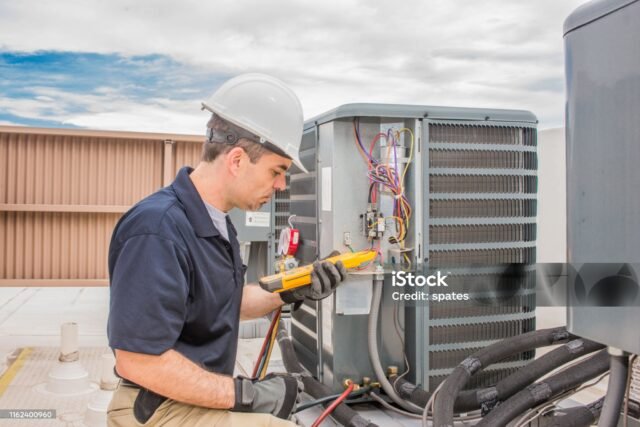
How to Start a Heating and Air Conditioning Business: The Complete 2026 Guide
Last Updated: September 8, 2026
Disclosure: This article contains no affiliate links. It is independent editorial content based on publicly available government guidance, industry resources, and general small-business information.
Starting an HVAC company can be a profitable opportunity if you have the technical skills, business knowledge, and commitment to customer service required to compete in the heating and cooling industry.
If you are researching how to start a heating and air conditioning business, this complete 2026 guide will walk you through the major steps, including choosing your business model, creating a business plan, handling licensing and certification, estimating startup costs, buying equipment, finding customers, hiring technicians, and growing your company.
Whether you want to operate a small residential HVAC company or eventually build a larger commercial heating and air conditioning business, the foundation is the same: provide reliable service, control your costs, follow applicable regulations, and build a strong reputation.
Table of Contents
- Why Start an HVAC Business?
- How Much Does It Cost to Start an HVAC Business?
- Choose Your HVAC Business Model
- Create an HVAC Business Plan
- Choose a Business Structure
- Handle HVAC Licensing and Certification
- Get Business Insurance
- Buy HVAC Tools and Equipment
- Choose a Service Area
- Set Your HVAC Pricing
- Build Your HVAC Brand and Website
- Get Your First HVAC Customers
- Use Maintenance Plans to Create Recurring Revenue
- Hire and Train HVAC Technicians
- Track Your HVAC Business Finances
- Common Mistakes to Avoid
- How to Grow an HVAC Business
- Frequently Asked Questions
- Final Thoughts
Why Start an HVAC Business?
Heating, ventilation, and air conditioning services are essential for homes, offices, retail locations, restaurants, warehouses, and other buildings.
Unlike businesses that depend entirely on discretionary spending, HVAC companies often provide services customers need when equipment breaks, indoor temperatures become uncomfortable, or systems require maintenance.
An HVAC company can generate revenue from several services, including:
- Air conditioning repair
- Heating repair
- HVAC installation
- Preventive maintenance
- Furnace service
- Heat pump installation and repair
- Ductwork services
- Indoor air quality services
- Thermostat installation
- Commercial HVAC maintenance
- Emergency HVAC services
The business can also create recurring revenue through maintenance agreements and service contracts.
If you are interested in entrepreneurship more broadly, you can also read our guide on how to succeed in business.
How Much Does It Cost to Start an HVAC Business?
One of the first questions people ask when learning how to start a heating and air conditioning business is how much money they need.
The answer depends heavily on your location, business model, equipment, vehicle, licensing requirements, insurance, employees, and whether you already own professional HVAC tools.
A small owner-operated HVAC business may require considerably less capital than a company that starts with several technicians, multiple service vehicles, a warehouse, and extensive inventory.
Estimated HVAC Startup Costs
| Startup expense | Estimated range |
|---|---|
| Business registration and permits | $100–$1,000+ |
| HVAC licensing and certifications | $100–$1,500+ |
| Insurance | $1,000–$5,000+ annually |
| Service vehicle | $5,000–$50,000+ |
| HVAC tools and diagnostic equipment | $2,000–$15,000+ |
| Initial parts and inventory | $1,000–$10,000+ |
| Website and branding | $300–$3,000+ |
| Software and communication | $300–$2,000+ |
| Initial advertising | $500–$5,000+ |
| Office or storage space | $0–$5,000+ |
| Working capital | $5,000–$25,000+ |
These are planning estimates rather than fixed prices. Local requirements and your business model can make the actual startup cost much higher or lower.
Start Lean If Your Budget Is Limited
You do not necessarily need a large office, multiple employees, and several trucks on day one.
A new owner can potentially start with:
- One properly equipped service vehicle
- Essential HVAC tools
- A home office where legally permitted
- Basic business software
- A professional website
- Business insurance
- Required licenses and certifications
- A small inventory of commonly needed parts
- A focused local marketing strategy
Starting lean can help you preserve cash while you build your customer base.
Choose Your HVAC Business Model
Before spending money, decide what type of HVAC company you want to build.
Your business model will influence your equipment, employees, marketing strategy, insurance needs, pricing, and working capital requirements.
| Business model | Best for | Main advantage | Main challenge |
|---|---|---|---|
| Residential service | Homeowners | Large local market | Competition |
| Residential installation | Replacement projects | Larger individual jobs | Higher overhead |
| Commercial HVAC | Businesses and facilities | Larger contracts | Longer sales cycles |
| Maintenance plans | Recurring customers | Predictable revenue | Requires ongoing service |
| Emergency HVAC | Urgent repairs | Higher-value service opportunities | Scheduling and staffing |
| Specialized HVAC | Specific systems | Specialized expertise | Smaller target market |
For many first-time owners, starting with residential repair, maintenance, and installation can be easier to manage than immediately targeting large commercial contracts.
Create an HVAC Business Plan
A business plan gives you a roadmap for building the company.
Your HVAC business plan should explain:
- What services you will provide
- Who your target customers are
- Where you will operate
- Who your competitors are
- How you will price services
- How customers will find you
- What equipment you need
- How much money you need to start
- How you will manage cash flow
- Whether you will hire employees
- What your revenue goals are
You do not need a 100-page document.
A practical business plan can be much shorter as long as it answers the most important questions about how the company will operate and make money.
Choose a Business Structure
Choose an appropriate legal structure before you begin operating.
Common structures include:
- Sole proprietorship
- Limited liability company (LLC)
- Partnership
- Corporation
An LLC is commonly considered by small-business owners because it can provide liability protection while remaining relatively straightforward to operate. However, the right structure depends on your circumstances and state requirements.
Consider speaking with a qualified attorney or tax professional before choosing your structure.
After establishing the business, you may also need an Employer Identification Number (EIN). The IRS explains that an EIN is a federal tax identification number and that eligible businesses can apply directly with the IRS for free.
Official resource: IRS Employer Identification Number (EIN)
Handle HVAC Licensing and Certification
Licensing is one of the most important parts of learning how to start a heating and air conditioning business.
HVAC licensing requirements vary by state, county, and city. Some jurisdictions require specific contractor licenses, while others may have additional requirements for particular types of work.
Before accepting jobs, check the requirements where your business will operate.
EPA Section 608 Certification
Federal requirements also apply to technicians who work with regulated refrigerants.
The U.S. Environmental Protection Agency states that technicians who maintain, service, repair, or dispose of equipment that could release refrigerants must obtain the appropriate Section 608 certification.
There are four main certification types:
- Type I — Small appliances
- Type II — High-pressure appliances
- Type III — Low-pressure appliances
- Universal — All covered equipment types
Official resource: EPA Section 608 Technician Certification Requirements
The EPA also provides a list of approved certification programs.
Do not assume that completing a training course automatically gives you the required certification. Check the specific certification and licensing requirements that apply to your work.
Check State and Local Requirements
Depending on where you operate, you may need:
- Contractor licensing
- Local business registration
- Building permits
- Mechanical permits
- Sales tax registration
- Workers’ compensation coverage
- General liability insurance
- Bonding
- Additional trade certifications
Always verify requirements with your state and local authorities before starting work.
Get Business Insurance
Insurance can protect your HVAC company from potentially expensive claims.
Common types of insurance to investigate include:
- General liability insurance
- Commercial auto insurance
- Workers’ compensation insurance
- Tools and equipment coverage
- Property insurance
- Professional liability coverage when applicable
Your insurance needs depend on your services, employees, vehicles, contracts, and location.
Do not simply choose the cheapest policy. Make sure the coverage matches the risks associated with your HVAC business.
Buy HVAC Tools and Equipment
Your tools are essential to delivering professional service.
A basic HVAC service operation may need equipment such as:
- Digital manifold gauges
- Refrigerant recovery equipment
- Vacuum pump
- Micron gauge
- Refrigerant scale
- Leak detection equipment
- Multimeter
- Clamp meter
- Temperature probes
- Electrical testing equipment
- Hand tools
- Power tools
- Cordless drills
- Ladders
- Safety equipment
- Diagnostic instruments
You may also need specialized equipment depending on the systems you install and repair.
Do Not Overspend on Day One
A common mistake is purchasing every tool available before the company has customers.
Instead:
- Identify the services you will initially provide.
- List the equipment required for those services.
- Buy high-quality essential tools first.
- Add specialized equipment as demand grows.
- Maintain and replace tools as necessary.
ACCA provides technical resources covering residential HVAC, commercial and industrial work, refrigerants, safety, and other areas of the trade.
Industry resource: ACCA HVAC Resources
Choose a Service Area
Your service area should be large enough to provide a healthy customer base but small enough to keep travel time under control.
Consider:
- Population density
- Household income
- Number of competitors
- Climate
- Age of homes
- Commercial development
- Local heating and cooling demand
- Driving distances
- Emergency service demand
A tightly focused service area can make marketing and scheduling easier when you are starting out.
Set Your HVAC Pricing
Pricing is one of the most important financial decisions you will make.
Your pricing should account for:
- Labor
- Technician wages
- Payroll taxes
- Vehicle expenses
- Fuel
- Insurance
- Tools
- Parts
- Equipment
- Office costs
- Advertising
- Software
- Taxes
- Warranty costs
- Overhead
- Desired profit
Avoid setting prices simply by copying another HVAC company’s prices.
Common HVAC Pricing Models
You may use:
- Flat-rate pricing
- Hourly labor
- Diagnostic fees
- Service-call fees
- Emergency service pricing
- Installation project pricing
- Maintenance-plan pricing
Flat-rate pricing can make estimates easier for customers to understand, while hourly pricing may be appropriate for certain types of work.
Your final pricing strategy should reflect your market, costs, expertise, and desired margins.
Build Your HVAC Brand and Website
A professional brand can make a major difference when customers compare HVAC companies.
Your business should have:
- A memorable business name
- Professional logo
- Consistent colors and branding
- Business phone number
- Professional email address
- Service-area information
- Clear list of services
- Customer reviews
- Easy contact options
- Professional website
A website is especially important because customers frequently research HVAC companies before calling.
For more information, see our guide on why businesses need a professional website.
Create a Google Business Profile
A Google Business Profile can help eligible local businesses appear in Google Search and Maps.
Keep your profile accurate and consistent.
Include:
- Correct business name
- Correct address or service area
- Phone number
- Website
- Business hours
- Services
- Photos
- Service information
Encourage satisfied customers to leave genuine reviews and respond professionally to customer feedback.
Get Your First HVAC Customers
Getting the first customers is often one of the hardest parts of how to start a heating and air conditioning business.
Start with a combination of local and digital marketing.
1. Google Search
Create a strong local online presence and optimize your website for searches related to your services and service area.
Examples include:
- HVAC repair near me
- Air conditioning repair
- Furnace repair
- AC installation
- Heating repair
- HVAC maintenance
- Emergency HVAC service
2. Referrals
Ask satisfied customers to recommend your company to friends, family, coworkers, and neighbors.
A strong referral network can become one of your most valuable marketing channels.
3. Local Partnerships
Build relationships with:
- Property managers
- Real estate agents
- Home inspectors
- General contractors
- Electricians
- Plumbers
- Roofing contractors
- Property investors
These professionals may encounter customers who need HVAC services.
4. Social Media
Use social media to demonstrate your expertise.
You can post:
- Before-and-after projects
- Maintenance tips
- HVAC troubleshooting advice
- Energy-efficiency tips
- New equipment installations
- Customer testimonials
- Seasonal reminders
5. Paid Advertising
Paid advertising can generate leads quickly, but track your results carefully.
Measure:
- Leads
- Calls
- Booked appointments
- Cost per lead
- Cost per customer
- Revenue per customer
Do not continue spending money on advertising that consistently produces poor-quality leads.
Use Maintenance Plans to Create Recurring Revenue
Maintenance plans can provide recurring revenue and help customers maintain their systems.
A maintenance plan might include:
- Seasonal inspections
- Filter checks
- System cleaning
- Electrical inspection
- Refrigerant checks when appropriate
- Performance testing
- Priority scheduling
- Discounted repairs
The exact services should be clearly defined in your agreement.
Maintenance plans can also help your technicians identify potential problems before a complete system failure occurs.
Hire and Train HVAC Technicians
You may start as the primary technician and eventually hire additional employees.
When hiring, consider:
- Technical skills
- Certifications
- Experience
- Customer-service ability
- Reliability
- Communication
- Problem-solving
- Safety awareness
Technical knowledge is important, but customer service can be just as important.
A technician who communicates clearly, arrives on time, treats customers respectfully, and keeps work areas clean can help generate repeat business and positive reviews.
Invest in Training
HVAC technology changes over time.
Encourage employees to continue learning about:
- New equipment
- Refrigerants
- Energy efficiency
- Diagnostics
- Electrical systems
- Safety
- Installation practices
- Building science
- Customer service
ACCA provides industry resources that can support technical and business education for HVAC professionals.
Track Your HVAC Business Finances
Good financial management is essential for long-term success.
Track:
- Revenue
- Gross profit
- Net profit
- Labor costs
- Parts costs
- Vehicle expenses
- Advertising expenses
- Insurance
- Payroll
- Taxes
- Accounts receivable
- Cash flow
Keep personal and business finances separate.
Use accounting software or work with a qualified professional to maintain accurate records.
Know Your Break-Even Point
Your break-even point tells you approximately how much revenue you need to cover your costs.
For example, if your fixed monthly expenses are $15,000 and your average gross profit contribution per job is $500, you would need approximately 30 such jobs to cover those fixed costs before considering additional profit and other variables.
Understanding your numbers makes pricing and hiring decisions much easier.
Common Mistakes to Avoid
When learning how to start a heating and air conditioning business, avoid these common mistakes.
1. Starting Without Enough Working Capital
Revenue may be inconsistent during the first months.
Keep enough cash available for:
- Fuel
- Payroll
- Insurance
- Parts
- Advertising
- Vehicle repairs
- Unexpected expenses
2. Underpricing Services
Being the cheapest company does not guarantee success.
If your prices do not cover labor, overhead, taxes, and profit, the company will struggle even when sales increase.
3. Ignoring Customer Service
A technically excellent job can still result in a poor review if the technician is rude, late, careless, or difficult to communicate with.
4. Buying Too Much Equipment
Do not spend your startup capital on equipment you rarely use.
5. Ignoring Local Licensing Rules
Operating without required licensing or permits can create serious legal and financial problems.
6. Depending on Only One Marketing Channel
Do not rely entirely on Google, social media, referrals, or paid advertising.
Build multiple customer-acquisition channels over time.
7. Failing to Track Profitability
High revenue does not necessarily mean high profit.
Track the actual cost of completing jobs.
How to Grow an HVAC Business
Once your company has a stable customer base, you can focus on expansion.
Growth opportunities include:
- Adding service technicians
- Expanding your service area
- Offering maintenance agreements
- Adding commercial HVAC services
- Offering indoor air quality services
- Adding heat pump services
- Increasing installation capacity
- Improving online marketing
- Building referral partnerships
- Improving scheduling efficiency
Before expanding, make sure your existing operation is financially healthy.
You can also read our guide on how to grow a heating and air conditioning business for additional growth strategies.
Frequently Asked Questions
How much money do I need to start an HVAC business?
There is no single amount that applies to every company. A small owner-operated HVAC business can require significantly less capital than a company that starts with several employees, vehicles, equipment, and inventory.
Your location and business model will have a major effect on startup costs.
Is an HVAC business profitable?
An HVAC business can be profitable when it is managed properly. Profitability depends on pricing, labor costs, overhead, demand, service mix, customer acquisition, and operational efficiency.
Do HVAC technicians need certification?
Certain federal requirements apply to technicians who handle regulated refrigerants. EPA Section 608 certification is required for covered activities involving stationary refrigeration and air-conditioning equipment.
State and local licensing requirements can also apply.
Can I start an HVAC business without being an HVAC technician?
It may be possible to own an HVAC company without personally performing technical work, depending on state and local laws. However, you would need qualified and properly licensed or certified personnel to perform regulated work.
Check your local requirements before operating.
What services should a new HVAC company offer?
A new company might begin with a focused group of services such as:
- AC repair
- Heating repair
- HVAC maintenance
- System replacement
- Thermostat installation
- Basic indoor air quality services
As the business grows, you can expand into additional services.
How do HVAC companies get customers?
HVAC companies can get customers through:
- Google Search
- Google Business Profile
- Referrals
- Reviews
- Local partnerships
- Social media
- Paid advertising
- Repeat customers
- Maintenance plans
The strongest companies usually use several marketing channels rather than relying on one.
Final Thoughts
Learning how to start a heating and air conditioning business involves much more than knowing how to repair an air conditioner or install a furnace.
You also need to understand licensing, insurance, pricing, marketing, customer service, financial management, hiring, and business operations.
A practical approach is to start with a manageable service area, keep overhead under control, invest in the right tools, follow all applicable regulations, build a professional online presence, and focus heavily on customer satisfaction.
As your reputation grows, you can add technicians, vehicles, maintenance plans, installation services, commercial customers, and new service areas.
The goal is not simply to start an HVAC company. The goal is to build an HVAC business that customers trust and that can remain profitable for years.
Author’s Note
This guide is intended for general educational purposes. HVAC licensing, contractor requirements, permits, insurance requirements, tax obligations, and refrigerant regulations can vary by location and type of work. Always verify current requirements with the appropriate government agencies and qualified professionals before starting or expanding an HVAC company.


MOST COMMENTED
Uncategorized
What Does a Business Consultant Do?- Best 2026 Guide
Uncategorized
What Does a Business Consultant Do? Best 2026 Guide
Uncategorized
Why Businesses Need a Professional Website?- Best 2026 Guide
Uncategorized
How to Invest in a Small Business? -Best 2026 Guide
Uncategorized
What Is Business Attire? The Best Guide (2026)
Uncategorized
How to Start a Construction Business in 2026: Complete Guide
Uncategorized
How to Succeed in Business: The Complete 2026 Guide