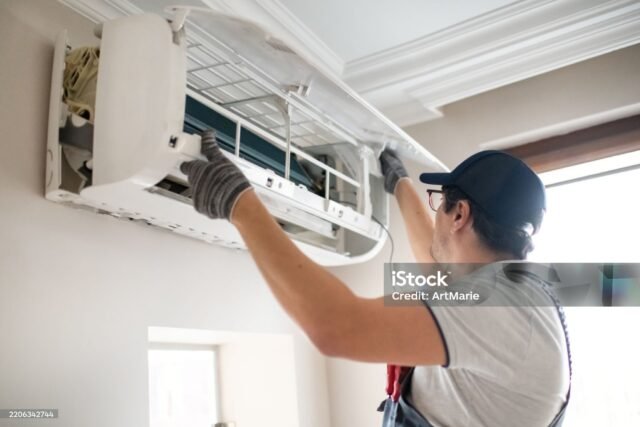
How to Grow a Heating and Air Conditioning Business: 16 Proven Tips in 2026
Last Updated: September 8, 2026
Disclosure: This article contains no affiliate links and reflects independent editorial content based on publicly available government resources, industry research, and established small business practices.
Learning how to grow a heating and air conditioning business requires more than being a skilled HVAC technician. You also need reliable systems for attracting customers, converting leads, controlling costs, improving customer retention, and building a strong local reputation.
If your HVAC company already has satisfied customers but growth has slowed, the answer may not be working longer hours. It may be improving the business systems behind the work.
This guide explains how to grow a heating and air conditioning business in 2026 using practical strategies that can help an HVAC company increase visibility, generate more sales, improve customer loyalty, and operate more efficiently.
Key Takeaways
- Consistent customer acquisition is essential for long-term HVAC business growth.
- Local search visibility and a strong Google Business Profile can help homeowners find your company.
- Competitive pricing should protect your profit instead of relying only on being the cheapest option.
- Maintenance agreements can encourage repeat business and improve customer retention.
- Reviews and referrals can strengthen trust with potential customers.
- Tracking leads, booked jobs, average ticket value, and marketing costs helps you make better decisions.
- Growth becomes easier when marketing, sales, customer service, and operations work together.
What Is HVAC Business Growth?
HVAC business growth means increasing the size and profitability of your heating and air conditioning company in a controlled and sustainable way.
Revenue is one important measurement, but it is not the only one.
A company can increase sales while making less profit if labor costs, vehicle expenses, advertising costs, or material costs are rising too quickly.
A healthier definition of growth includes several measurements:
- Revenue
- Gross profit
- Net profit
- Number of qualified leads
- Number of booked jobs
- Average job value
- Customer retention
- Number of reviews
- Repeat customers
- Technician productivity
- Marketing return on investment
For example, suppose an HVAC company increases annual revenue from $500,000 to $600,000 but profit falls because operating costs increased significantly.
That is not necessarily healthy growth.
The goal of growing a heating and air conditioning business should be to increase revenue while maintaining or improving the company’s financial performance.
Why Growing an HVAC Business Matters in 2026
The HVAC industry continues to benefit from demand for heating, cooling, installation, maintenance, and repair services.
The U.S. Bureau of Labor Statistics projects employment of heating, air conditioning, and refrigeration mechanics and installers to grow 8 percent from 2024 to 2034, with about 40,100 openings projected each year over that period.
You can review the latest employment outlook directly from the U.S. Bureau of Labor Statistics Occupational Outlook Handbook.
However, strong industry demand does not automatically guarantee success for every HVAC company.
Customers still compare companies based on factors such as:
- Online reviews
- Local search visibility
- Response time
- Pricing
- Professionalism
- Availability
- Financing options
- Warranty information
- Quality of workmanship
- Customer service
That means learning how to grow a heating and air conditioning business requires both technical expertise and business management skills.
If you are also interested in broader business strategies, see our guide on how to succeed in business.
How to Grow a Heating and Air Conditioning Business Step by Step
1. Know Your Numbers
Before spending more money on advertising, understand how your company is performing.
Track your numbers every week.
At minimum, monitor:
- Total leads
- Calls received
- Appointments booked
- Jobs completed
- Average ticket value
- Replacement sales
- Maintenance agreements sold
- Marketing expenses
- Gross profit
- Outstanding invoices
This information helps you identify where the business is losing opportunities.
For example, if you receive 100 qualified calls but only 40 become booked appointments, the problem may be your phone handling or sales process.
If 80 appointments are booked but only 30 become completed jobs, scheduling or follow-up may need attention.
Do not assume you have a marketing problem until you understand the entire customer journey.
2. Improve Your Pricing
One of the most important HVAC business growth strategies is developing pricing that covers your actual costs and provides enough profit to operate and grow the company.
Your pricing should account for:
- Technician wages
- Payroll taxes
- Insurance
- Vehicles
- Fuel
- Tools
- Equipment
- Materials
- Office expenses
- Software
- Advertising
- Warranty costs
- Training
- Taxes
- Business profit
Avoid setting prices simply because another HVAC company charges less.
A competitor may have different labor costs, overhead, or business goals.
Instead, calculate what each service actually costs your company and establish pricing that supports a sustainable operation.
Review your pricing regularly, especially when labor, equipment, or material costs increase.
3. Strengthen Your Google Business Profile
For a local HVAC company, online visibility is extremely important.
Your Google Business Profile should contain accurate and current information about your company.
Make sure your profile includes:
- Correct business name
- Correct phone number
- Service area
- Business hours
- Website
- Services
- High-quality business photos
- Recent project photos
- Customer reviews
- Accurate business category
Google Business Profile can help local customers discover business information through Google Search and Maps.
For official guidance, see Google Business Profile Help.
Do not create fake locations or misleading information simply to rank in more cities.
Focus on building a legitimate local presence in the areas your company actually serves.
4. Build a Consistent Review System
Reviews can have a major influence on how potential customers evaluate a local service company.
BrightLocal’s 2024 Local Consumer Review Survey found that Google remained the most used platform for reading local business reviews, with 81 percent of consumers reporting that they used Google for this purpose.
You can review the research directly through BrightLocal’s Local Consumer Review Survey.
Instead of asking customers for reviews randomly, create a consistent process.
After successfully completing a job:
- Confirm that the customer is satisfied.
- Send a polite review request.
- Provide an easy link to your Google review page.
- Thank the customer for their feedback.
- Respond professionally to reviews.
Do not buy reviews or create fake customer experiences.
Your review strategy should be based on genuine customer experiences.
5. Create an HVAC Maintenance Plan
Maintenance agreements can become an important part of an HVAC company’s customer retention strategy.
Instead of interacting with customers only when equipment breaks, a maintenance program creates regular opportunities to provide service.
A maintenance plan might include services such as:
- Seasonal system inspections
- Filter checks
- System performance checks
- Cleaning
- Safety inspections
- Priority scheduling
- Discounts on selected services
The exact benefits should depend on your business model and the equipment you service.
The bigger advantage is the relationship.
A customer who has a maintenance agreement with your company already has a reason to contact you again.
6. Improve Your Local SEO
If homeowners cannot find your company when they search for HVAC services, you are missing potential customers.
Your website should target the services and locations you actually serve.
Important pages may include:
- Air conditioning repair
- Air conditioning installation
- Furnace repair
- Furnace installation
- Heat pump services
- HVAC maintenance
- Emergency HVAC service
- Commercial HVAC services
- Appropriate service-area pages
Avoid creating dozens of nearly identical pages simply to target different cities.
Instead, create useful pages that answer real customer questions and clearly explain the services you provide.
A professional website is also important for converting visitors into customers. See our guide on why businesses need a professional website.
7. Make Your Website Work for Mobile Customers
Many HVAC customers search for help from their phones.
Your website should therefore make it easy for visitors to:
- Call your company
- Request service
- Find your service area
- Understand your services
- Read customer reviews
- Learn about financing
- See your credentials
- Find your business hours
- Understand what happens after they contact you
Keep important information near the top of the page.
A customer with a broken air conditioner does not want to spend five minutes searching for your phone number.
8. Respond to Leads Quickly
HVAC customers often contact multiple companies when they need urgent service.
A slow response can mean losing the customer to a competitor.
Create a system for answering calls and responding to online inquiries quickly.
If you cannot answer every call personally, consider:
- A trained office employee
- An answering service
- Call forwarding
- Automated appointment requests
- Text message follow-up
The goal is simple: make it easy for a potential customer to reach a real person or submit a service request.
9. Use Multiple HVAC Marketing Channels
There is no single marketing channel that works perfectly for every HVAC company.
A strong marketing strategy can combine several channels.
Local SEO
Useful for building long-term visibility in local search.
Google Local Services Ads
Can help eligible local service businesses generate leads directly from Google.
Paid Search Advertising
Can provide visibility for high-intent searches when campaigns are managed carefully.
Referrals
Existing customers can become an important source of new business.
Email Marketing
Useful for communicating with existing customers about maintenance, seasonal services, and company updates.
Social Media
Can demonstrate your work, introduce technicians, and show customers what your company does.
Direct Mail
Can be useful in selected neighborhoods when campaigns are carefully targeted.
Do not automatically spend more money on every channel.
Track which channels produce qualified leads and completed jobs.
10. Create a Referral System
Satisfied customers can become one of your best sources of new business.
Make referrals easy.
For example, after completing a successful installation or repair, thank the customer and let them know that referrals are appreciated.
You can also develop a formal referral program if it makes financial sense for your business.
The important thing is to provide excellent service first.
A referral program cannot compensate for poor workmanship or bad customer service.
11. Increase HVAC Sales Through Education
Increasing HVAC sales does not mean pressuring homeowners.
The better approach is to educate customers and clearly explain their options.
When appropriate, technicians can present different solutions based on:
- Immediate repair
- Longer-term repair
- Replacement
- Efficiency
- Equipment age
- Expected operating costs
- Warranty
- Financing
Customers can then make informed decisions.
Your technicians should explain the problem clearly, answer questions honestly, and avoid recommending unnecessary work.
Trust is more valuable than a single large sale.
12. Train Your Technicians
Your technicians represent your company every time they enter a customer’s home.
Technical skills are essential, but technicians also need training in communication and customer service.
Training can cover:
- Customer communication
- Explaining technical problems in simple language
- Professional appearance
- Job documentation
- Safety
- Equipment recommendations
- Pricing procedures
- Review requests
- Maintenance agreements
- Handling customer questions
The goal is not to turn technicians into aggressive salespeople.
The goal is to help them communicate professionally and identify legitimate solutions for customers.
Industry resources from the Air Conditioning Contractors of America (ACCA) can also help HVAC professionals stay informed about technical and industry practices.
13. Improve Customer Retention
Acquiring a new customer can require more effort than serving an existing customer who already knows and trusts your company.
Create a follow-up process.
After the job:
- Send a thank-you message.
- Confirm that the system is working properly.
- Provide maintenance information.
- Save equipment information.
- Record the customer’s service history.
- Schedule future maintenance when appropriate.
- Ask for feedback.
This creates a better customer experience and gives your company more opportunities to earn repeat business.
14. Use Customer Data to Make Better Decisions
Your HVAC software or customer relationship management system should help you understand your customer base.
Track information such as:
- Equipment type
- Installation date
- Repair history
- Maintenance history
- Previous invoices
- Customer location
- Service frequency
- Lead source
When a customer calls again, your team should be able to understand the history of the account.
This makes the company look more professional and can save technicians valuable time.
15. Hire Carefully as the Company Grows
Growing revenue without building the right team can create serious operational problems.
Do not hire simply because you are busy for one month.
Look at your workload over time.
Before adding a technician, consider:
- Number of service calls
- Installation backlog
- Average technician utilization
- Profitability per truck
- Customer demand
- Training capacity
- Management capacity
A growing company also needs administrative support.
At some point, the owner cannot personally handle every phone call, estimate, invoice, hiring decision, and customer complaint.
If you are considering entrepreneurship beyond HVAC, our guide on how to start a heating and air conditioning business covers the business setup side in greater detail.
16. Build Standard Operating Procedures
Standard operating procedures make it easier to deliver consistent service as the company grows.
Create simple written procedures for:
- Answering phone calls
- Scheduling jobs
- Dispatching technicians
- Completing service calls
- Creating estimates
- Collecting payments
- Requesting reviews
- Handling complaints
- Following up after installations
- Maintaining vehicles
- Ordering equipment
The goal is to make important processes repeatable instead of depending entirely on the owner’s memory.
Best HVAC Marketing Strategies Compared
| Strategy | Main Benefit | Best For |
|---|---|---|
| Local SEO | Builds long-term local visibility | Companies focused on sustainable growth |
| Google Business Profile | Improves local presence and customer information | Local HVAC companies |
| Google Local Services Ads | Generates paid leads from local searches | Companies needing additional lead volume |
| Referral marketing | Builds trust through existing customers | Established companies |
| Review generation | Strengthens online reputation | All local HVAC companies |
| Maintenance plans | Encourages repeat business | Companies seeking customer retention |
| Email marketing | Keeps existing customers engaged | Companies with established customer lists |
| Social media | Demonstrates work and builds brand awareness | Companies willing to create consistent content |
| Direct mail | Reaches selected local households | Targeted neighborhood campaigns |
Common Mistakes That Kill HVAC Business Growth
Many HVAC companies struggle to grow because of problems inside the business rather than a lack of demand.
Competing Only on Price
Being the cheapest company is not always a sustainable strategy.
Ignoring Follow-Up
A customer who does not hear from you after an estimate may choose another company.
Not Tracking Marketing
If you do not know where your leads come from, it becomes difficult to determine which marketing channels deserve more investment.
Ignoring Reviews
A weak or outdated review profile can make it harder for potential customers to trust your company.
Hiring Too Quickly
Adding employees before the business can support them financially can create unnecessary overhead.
Poor Cash Flow Management
A profitable company can still experience financial problems if it does not manage cash flow properly.
Depending Entirely on the Owner
If every important decision requires the owner, the business may become difficult to scale.
How to Increase HVAC Sales Without Being Pushy
The best HVAC sales process begins with understanding the customer’s problem.
Instead of immediately presenting an expensive replacement, explain:
- What failed
- Why it failed
- Whether repair is possible
- What the repair is expected to accomplish
- How old the equipment is
- What replacement options exist if replacement is appropriate
- What the customer can expect from each option
This approach gives customers information instead of pressure.
For larger replacement decisions, offering clearly explained options can also make it easier for customers to compare price, equipment, warranty, and expected value.
How to Know Whether Your HVAC Business Is Growing
Revenue alone does not tell the whole story.
Review these numbers every month:
| Metric | What It Tells You |
|---|---|
| Leads | How much demand your marketing generates |
| Booking rate | How effectively leads become appointments |
| Average ticket | Average revenue per completed job |
| Close rate | How often estimates become sales |
| Gross profit | How much remains after direct job costs |
| Net profit | Overall financial performance |
| Repeat customer rate | Customer retention |
| Review count | Online reputation growth |
| Cost per lead | Marketing efficiency |
| Revenue per technician | Operational productivity |
These measurements allow you to identify problems before they become serious.
A Simple 12-Month HVAC Growth Plan
Months 1 to 3: Build the Foundation
- Review pricing.
- Improve your Google Business Profile.
- Create a review request process.
- Improve your website.
- Track every lead source.
- Organize customer information.
Months 4 to 6: Focus on Customer Acquisition
- Improve local SEO.
- Test paid lead generation.
- Build a referral system.
- Promote maintenance agreements.
- Improve phone handling.
- Create useful local content.
Months 7 to 9: Improve Efficiency
- Review technician productivity.
- Improve scheduling.
- Create standard operating procedures.
- Automate customer follow-up.
- Review marketing return.
- Improve inventory management.
Months 10 to 12: Focus on Sustainable Expansion
- Evaluate hiring needs.
- Review profitable services.
- Expand only into suitable service areas.
- Strengthen your maintenance program.
- Improve financial reporting.
- Set goals for the following year.
Frequently Asked Questions
How do I grow a heating and air conditioning business fast?
Start by fixing the fundamentals. Improve your Google Business Profile, generate genuine customer reviews, respond quickly to leads, review your pricing, and create a systematic follow-up process. Then measure the results and invest more heavily in the channels that produce profitable customers.
How do I get more HVAC customers?
Use a combination of local SEO, Google Business Profile optimization, paid local advertising, referrals, customer reviews, and strong follow-up. The best combination depends on your market, budget, and existing customer base.
How can I increase HVAC sales?
Train your team to explain problems clearly and present appropriate options. Focus on education instead of pressure. Offering repair, replacement, and maintenance solutions when appropriate can help customers make informed decisions.
Are HVAC maintenance plans worth it?
They can be valuable because they encourage repeat interactions with customers and can create more predictable service demand. The exact benefits and pricing should be based on your costs and the services you can reliably provide.
How much should an HVAC company spend on marketing?
There is no universal amount that works for every HVAC company. Marketing budgets should consider revenue, profit margin, competition, service area, and growth goals. More importantly, track the cost of generating leads and the revenue those leads produce.
What is the biggest mistake HVAC business owners make?
One common mistake is focusing entirely on technical work while ignoring pricing, marketing, customer service, and financial management. A successful HVAC company needs strong technical operations and strong business systems.
Should an HVAC company focus on Google reviews?
Yes. Reviews are an important part of local reputation management. BrightLocal’s 2024 research found that Google was the most used platform among the review platforms included in its survey, with 81 percent of consumers reporting that they used Google to read local business reviews.
How important is local SEO for an HVAC company?
Local SEO can be valuable because HVAC services are usually location dependent. Homeowners generally need a company that serves their area, so appearing in relevant local searches can help connect your business with potential customers.
When should an HVAC company hire another technician?
Consider hiring when demand is consistently high enough to support another technician rather than basing the decision on a temporary increase in calls. Review workload, profitability, scheduling capacity, and cash flow before adding permanent labor costs.
How can an HVAC company retain more customers?
Provide reliable service, communicate clearly, follow up after jobs, maintain accurate customer records, and offer useful maintenance services. Customers are more likely to return when they trust the company and have a positive service experience.
Quick Summary
Learning how to grow a heating and air conditioning business is not simply about getting more service calls.
The strongest growth comes from building a complete business system.
That system should include:
- Reliable lead generation
- Strong local visibility
- Competitive and profitable pricing
- Fast customer response
- Professional sales processes
- Excellent workmanship
- Customer reviews
- Maintenance programs
- Follow-up
- Employee training
- Financial management
- Performance tracking
The most important step is to stop treating each part of the company as a separate activity.
Marketing brings customers into the business.
Sales turns opportunities into jobs.
Operations delivers the service.
Customer service builds trust.
Follow-up creates repeat business.
Financial management determines whether the growth is actually profitable.
When these systems work together, your HVAC company has a much stronger foundation for sustainable growth.
Final Checklist for Growing an HVAC Business
Before you focus on aggressive expansion, ask yourself:
- □ Is my pricing profitable?
- □ Is my Google Business Profile complete and accurate?
- □ Do I have a consistent review request process?
- □ Can customers reach me quickly?
- □ Does my website clearly explain my services?
- □ Do I know where my leads come from?
- □ Do I track my average ticket?
- □ Do I track my close rate?
- □ Do I have a customer follow-up process?
- □ Do I offer useful maintenance services?
- □ Are my technicians properly trained?
- □ Do I have written operating procedures?
- □ Do I understand my monthly profit and cash flow?
- □ Do I know which marketing channels actually generate customers?
If several answers are no, those areas may represent your biggest opportunities for improvement.
Final Thoughts
Learning how to grow a heating and air conditioning business requires more than finding more customers.
You need to build a company that can handle those customers profitably.
Start with the fundamentals. Understand your numbers, improve your pricing, strengthen your local presence, collect genuine customer reviews, and respond quickly to new leads.
Then focus on retention.
A customer who trusts your company for a repair today may need maintenance later and eventually need equipment replacement. Building a long-term relationship can be more valuable than constantly searching for completely new customers.
Growth should also be measured carefully.
Do not chase revenue at any cost. Look at profit, customer retention, marketing performance, technician productivity, and cash flow.
The goal is not simply to become a busier HVAC company.
The goal is to build a stronger, more profitable, and more sustainable heating and air conditioning business.
Sources and Further Reading
For additional information and authoritative resources, visit:
- U.S. Bureau of Labor Statistics — Heating, Air Conditioning, and Refrigeration Mechanics and Installers
- Google Business Profile Help
- BrightLocal — Local Consumer Review Survey
- Air Conditioning Contractors of America (ACCA)
- U.S. Small Business Administration — Launch Your Business
Author Bio
TheMagData editorial team publishes practical business and marketing guides designed to help entrepreneurs and small business owners make better-informed decisions.
This article is based on publicly available government resources, industry research, and established small business practices. It is intended for educational purposes and should not be considered legal, financial, or professional HVAC consulting advice.
Last Updated: September 8, 2026
Disclosure: This article contains no affiliate links and reflects independent editorial content.


MOST COMMENTED
Uncategorized
What Does a Business Consultant Do?- Best 2026 Guide
Uncategorized
What Does a Business Consultant Do? Best 2026 Guide
Uncategorized
Why Businesses Need a Professional Website?- Best 2026 Guide
Uncategorized
How to Invest in a Small Business? -Best 2026 Guide
Uncategorized
What Is Business Attire? The Best Guide (2026)
Uncategorized
How to Start a Construction Business in 2026: Complete Guide
Uncategorized
How to Succeed in Business: The Complete 2026 Guide